
 English
 Deutsch
 Français
 Português
 Español
 Bahasa Indonesia
 Tiếng Việt
 日本語
日本語
 한국어
한국어
 中文
中文
 ภาษาไทย
 العربية
 Русский
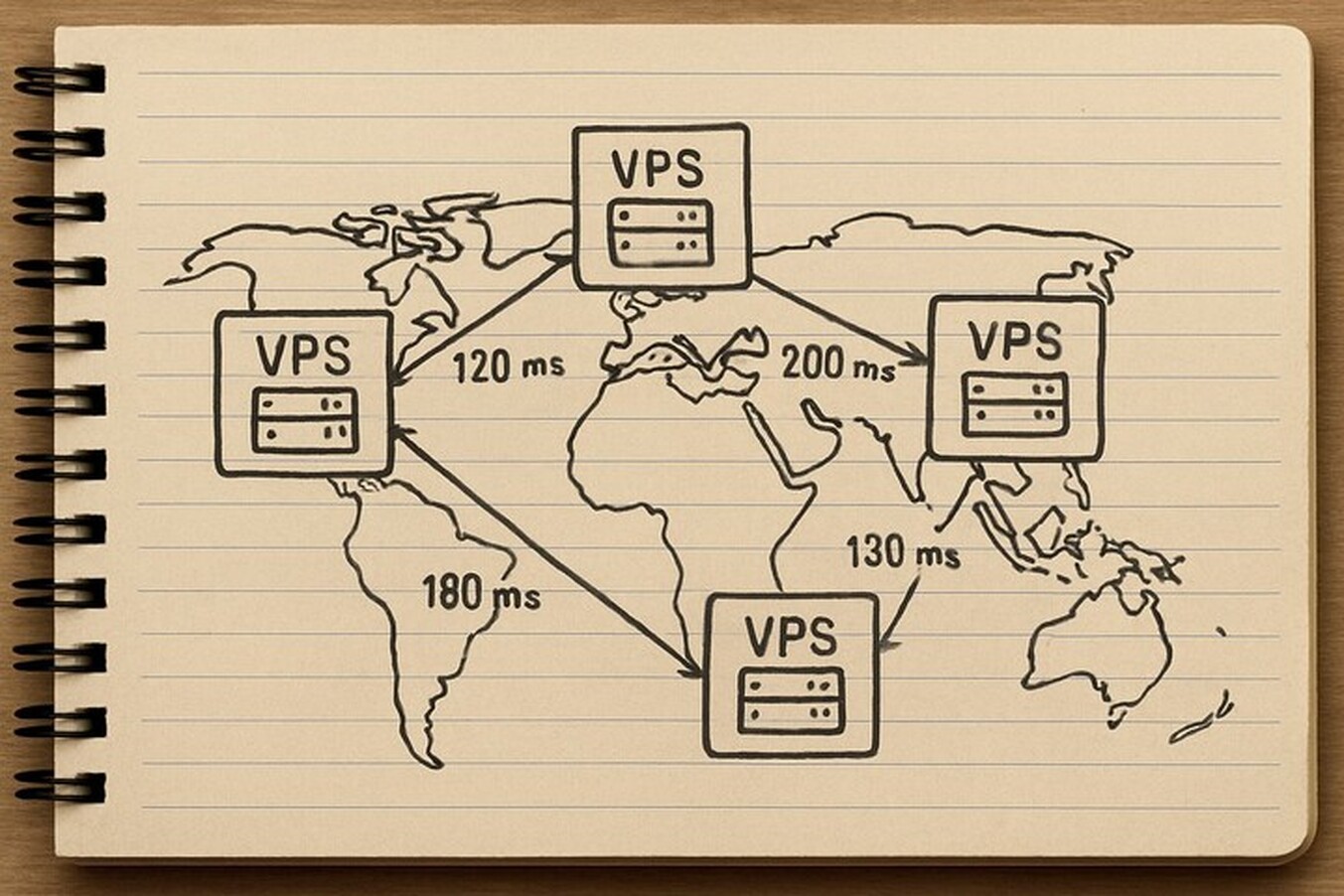
🌐 VPS for Inter-Broker Arbitrage: The Art of Balance
🔥 The Core Problem: The Location Paradox
If Broker A is in London and Broker B is in New York, you cannot be physically close to both at the same time. The speed of light is your fundamental limit.
Example: The fiber-optic signal transit latency between London and New York is roughly 65-70 ms. This is your absolute minimum ping, and there is no way around it.
Your objective is to choose a VPS that minimizes the total execution latency for both "legs" of the arbitrage trade.
🗺️ Location Selection Strategies
📍Strategy 1: The Equidistant Point (Theoretical)
Idea: Find a geographic midpoint between the brokers' servers. Example: For the London-New York pair, this would be a point in the middle of the Atlantic Ocean. Reality: Impractical. There are no data centers in the ocean. This strategy is almost never used.
🐢Strategy 2: Prioritizing the "Slow" Broker
Idea: Identify which broker has slower order execution or API response times, and place the VPS as close to them as possible to compensate for their sluggishness. Reality: Requires deep testing and an understanding of each broker's infrastructure. It can be effective but is complex to implement.
🏆 Strategy 3: The Financial Hub (Most Popular and Effective)
Idea: Place the VPS in one of the world's major financial hubs, where the highest concentration of broker servers, banks, and liquidity providers is located.
- London (LD4, Slough): Ideal if one (or both) of your brokers is a European Forex broker (LMAX, FXCM, IG Markets). Ping to many other London servers will be <1 ms.
- New York / New Jersey (NY4, Secaucus): Ideal if you trade through US brokers (Interactive Brokers, TD Ameritrade) or work with US-based ECNs.
- Frankfurt (FR2): Another major European hub, particularly for derivatives.
- Chicago: The core hub for futures trading.
How it works: You deploy a VPS in London. The ping to your London broker is 1 ms. The ping to your New York broker is 70 ms. You accept this asymmetry but secure ultra-fast execution for at least one leg of the trade, along with access to the hub's broader ecosystem.
🚀 Strategy 4: The Dual VPS Setup (Professional Approach)
Idea: Use two VPSs—one located near each broker.
- VPS A in London: Handles trades with Broker A.
- VPS B in New York: Handles trades with Broker B.
How it works:
- Your master routing script can be hosted on either VPS (or even a third one).
- Upon detecting an arbitrage opportunity, it sends execution signals to both VPSs simultaneously.
- Each VPS executes its respective leg of the trade with the lowest possible latency.
Pros:
- Maximum execution speed for both legs of the trade.
- Significantly reduces the risk of slippage on either side.
Cons:
- Cost: You are paying for two servers.
- Complexity: Requires setting up highly secure and ultra-fast synchronization between the servers. The slightest network glitch between the VPSs can result in a "single-leg fill"—which translates to a direct loss.
⚙️ Technical Specs and Providers
Hardware requirements for inter-broker arbitrage are much higher, as you need to maintain at least two connections, handle two data streams, and potentially run two trading terminals.
|
Parameter |
Recommended (1 VPS) |
Pro (Dual VPS or HFT) |
|---|---|---|
|
CPU |
4-8 vCPU (High-Frequency) |
8+ vCPU (Dedicated) |
|
RAM |
8-16 GB |
16-32+ GB |
|
Storage |
50+ GB NVMe SSD |
50+ GB NVMe SSD |
|
Network |
10 Gbps (Internal) |
10-40 Gbps (Cross-Connect) |
🏢 Recommended Providers
This is where specialized providers win by a massive margin, as they offer Cross-Connects—a direct physical cable linking your VPS to the exchange's or broker's infrastructure within the same data center.
- Beeks Financial Cloud: The ultimate choice. They have a presence in all key data centers (Equinix NY4, LD4, etc.) and allow you to establish ultra-fast communication between your global servers via their private network.
- ForexVPS.net: An excellent option if you are utilizing the "Financial Hub" strategy. They provide transparent ping times to hundreds of brokers from a single location, helping you pinpoint the optimal setup.
- Vultr / DigitalOcean: Suitable for the "Dual VPS" strategy in its early stages. You can easily spin up two servers in New Jersey and London and establish a link between them. It's more cost-effective but less reliable than specialized providers.
🛠️ Example: Arbitrage between LMAX (London) and Interactive Brokers (New York)
Scenario A: Single VPS ("Financial Hub" Strategy)
- Analysis: LMAX is an ECN; speed is critical. Most of its liquidity pools are in London.
- Solution: Deploy a VPS in London (e.g., with ForexVPS.net or Beeks).
- Expected Latencies:
- Ping to LMAX: ~1 ms.
- Ping to Interactive Brokers: ~70-75 ms.
- Risk: The "long" leg of the trade in New York might suffer slippage while the signal travels across the Atlantic. Your algorithm must account for this 75 ms delay. The trade should only be triggered if the potential profit significantly outweighs the expected slippage.
Scenario B: Dual VPS (Professional Strategy)
- Solution:
- Rent a VPS from Beeks in the Equinix LD4 (London) data center.
- Rent a second VPS from Beeks in the Equinix NY4 (New York) data center.
- Setup:
- A script connected to the LMAX API runs on the London VPS.
- A script connected to the Interactive Brokers API runs on the New York VPS.
- Both scripts receive execution commands from a central master algorithm.
- Expected Latencies:
- London VPS ↔ LMAX: <1 ms.
- New York VPS ↔ IB: <2 ms.
- Synchronization: It is absolutely critical to configure precise time synchronization between the servers using NTP (or PTP, if supported by the provider) for accurate logging and post-trade analysis.
⚠️ Major Risks and How a VPS Mitigates Them
- Asymmetric Slippage: The arbitrageur's worst enemy. This occurs when one leg of the trade executes at the expected price, but the second leg executes at a worse price because the market moved in the meantime.
- Solution: Ultra-low latency on both sides (Dual VPS strategy) or highly conservative profit calculations (Single VPS strategy).
- Execution Failure (Legging Risk): One broker accepts the trade, but the second rejects it (due to lack of liquidity, connection drop, etc.).
- Solution: A reliable VPS with 99.99% uptime and a stable network connection minimizes the probability of connection drops on your end.
💡 Conclusion and Recommendations
- For Beginners (<$50,000 capital): Start with the "Financial Hub" strategy. Choose a single VPS from Vultr or ForexVPS.net in London or New York. It’s cost-effective and will help you grasp the mechanics. Be prepared for asymmetric latencies.
- For Advanced Traders ($50,000 - $250,000 capital): Upgrade to the "Dual VPS" strategy. Use two providers like Vultr/DigitalOcean, or consolidate with a specialized host like ForexVPS.net utilizing servers in different locations.
- For Professionals and Funds (>$250,000 capital): No compromises—use the "Dual VPS" strategy with a premium provider like Beeks Financial Cloud. Leverage their private internal network for inter-server communication and request Cross-Connects directly to your brokers.
Choosing a VPS for inter-broker arbitrage is always a trade-off between cost, complexity, and speed. Start simple, but always keep the professional dual-server setup in mind as your ultimate goal. 🚀
❓ Frequently Asked Questions (FAQ)
Q: Can I run these trades from my home computer?
A: Absolutely not. A home internet connection adds 20-50 ms of unnecessary latency and is prone to packet loss. In arbitrage, this guarantees a loss.
Q: What is a Cross-Connect?
A: It is a physical yellow fiber-optic cable deployed inside the data center that links your server directly to the broker's server. This completely bypasses public internet switches.
Q: What is considered a normal ping for arbitrage within the same city?
A: Less than 1-2 milliseconds. If it's higher, you need to change your VPS provider.
Author: [JohnM/PairTrading.Pro] Tags: #Arbitrage #HFT #VPS #Trading #LMAX #AlgoTrading
